Where the light dweels.
Our studio breathes light within the Renaissance rooms of Palazzo Gondi – spaces where architecture and art meet with effortless grace each day, guided by attentive listening and by a sense of beauty that finds harmony in balance. Within this setting, steeped in historu and responsibility, we conceived an identity fragrance: a sensory extension of a small cultural project that narrates the very place where ideas are born.
Light of linen
transparent e measured,
a fruit-laden presence,
barefoot you cross the worlds…
the door of Palazzo Gondi
its rooms, its stones
its memories
its stained-glass window,
you are intuition and spark that beckons the heart to wonder
Canticle for Diletta & Nicola
by Ilaria Maria d’Urbano, poet
The threshold:a beginning.
The desire to create a perfume arose from a simple image – the threshold. It is the instant where space changes and leans toward becoming experience. We imagined a gentle essence, capable of shaping an atmosphere even before words. A discreet gesture meant to introduce our notion of welcome: an intimacy that is present yet never intrusive, crafted with the same care we devote to our work.
A scent made of memory.
If we had to capture it in an image, we would choose gold. Not the metal itself, but the warm light that hints rather than declares, a subtle presence that softly illuminates. Palazzo Gondi was central to this vision. Living each day within a building so rich in memory led us to imagine a fragrance capable of enduring – held in delicate balance between tradition and the present. It is a place that invites depth and measured through, yet leaves room for lightness, qualities we translated into scent.
Becoming fragrance.
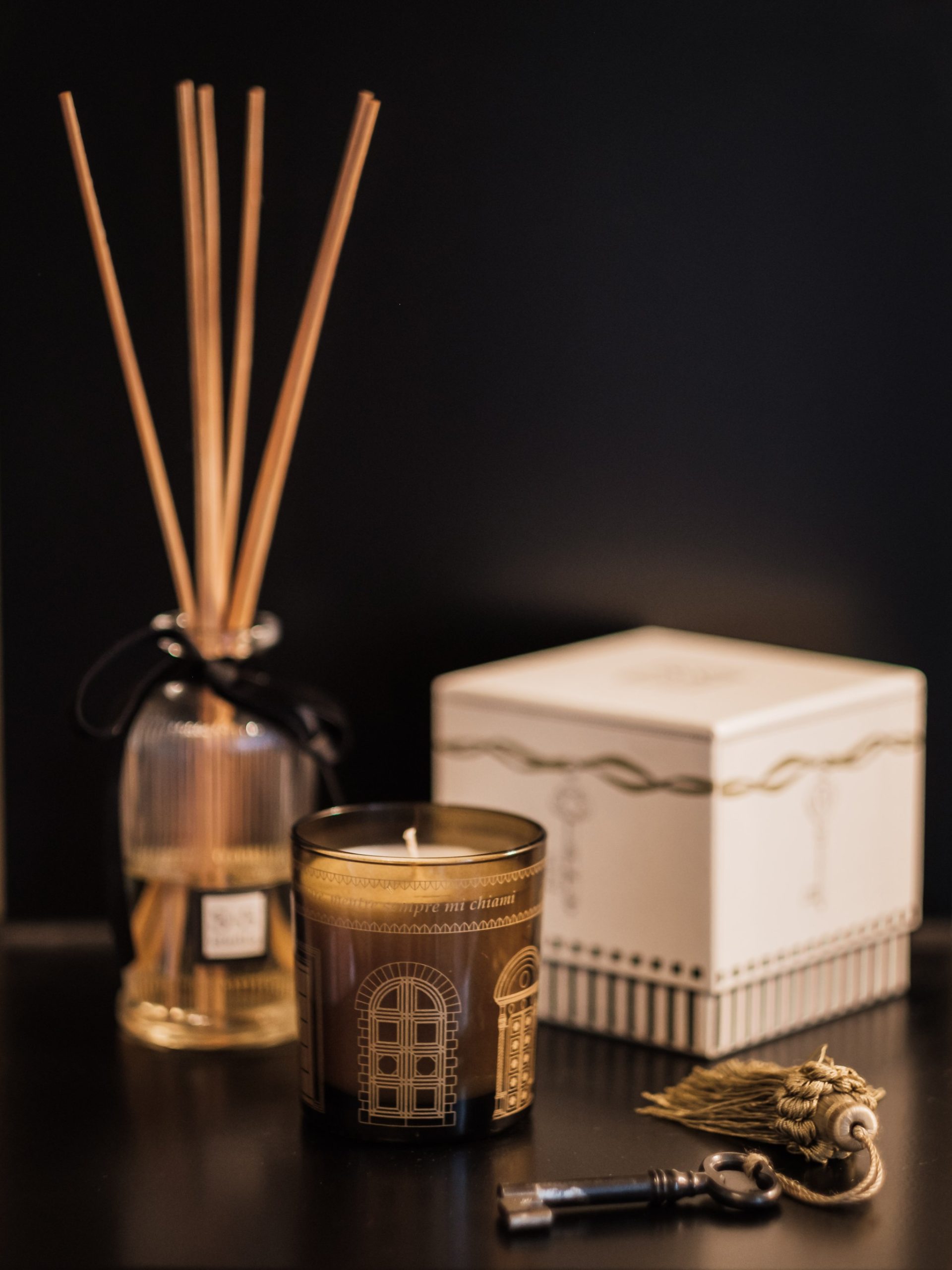
The scent took form gently, through a slow and fluid process. As in design, everything rests upon a balance between structure and fine retail. Thus, a story in three movements emerged: the opening, the heart, the base. The Mediterranean scrub rises with fullness, evoking Tuscany or Magna Graecia, before an architecture that converses with the land. The opening glows with peony, talc, and a faint fruity freshness. The heart unfolds in iris, linen, and baby powder – like a beam of light cutting across a room. The base gathers soft resins, delicate spices, and guaiac wood, sandalwood and cashmeran. At its centre stands the cypress, which in Roman times marked the entrance, inviting one to cross over. The idea of a “tapestry-accord” expresses the olfactory signature: a weave of materials and sensations in which every note is a thread, just as fabrics welcome and define space. Change a single thread, and the entire story shifts.
My beloved cypress,
vertical and abyssal, sacred as a cathedral
of our conjugal love,
a mystical, enveloping scent of sandalwood…
even if I fall silent – for you
who know everyting of me – it’s the same,
I rest in your shade of resin, unguent and chrism
in the divine union bodily and celestial
that endures beyond death
Canticle for Diletta & Nicola
by Ilaria Maria d’Urbano, poet
What lingers in the air.
The fragrance will remain with us, shared with all who pass through this place each day. Our hope is that it leaves a memory – arriving softly, staying quietly, like certain places that go on speaking long after you’ve left.
Light that reshapes space.
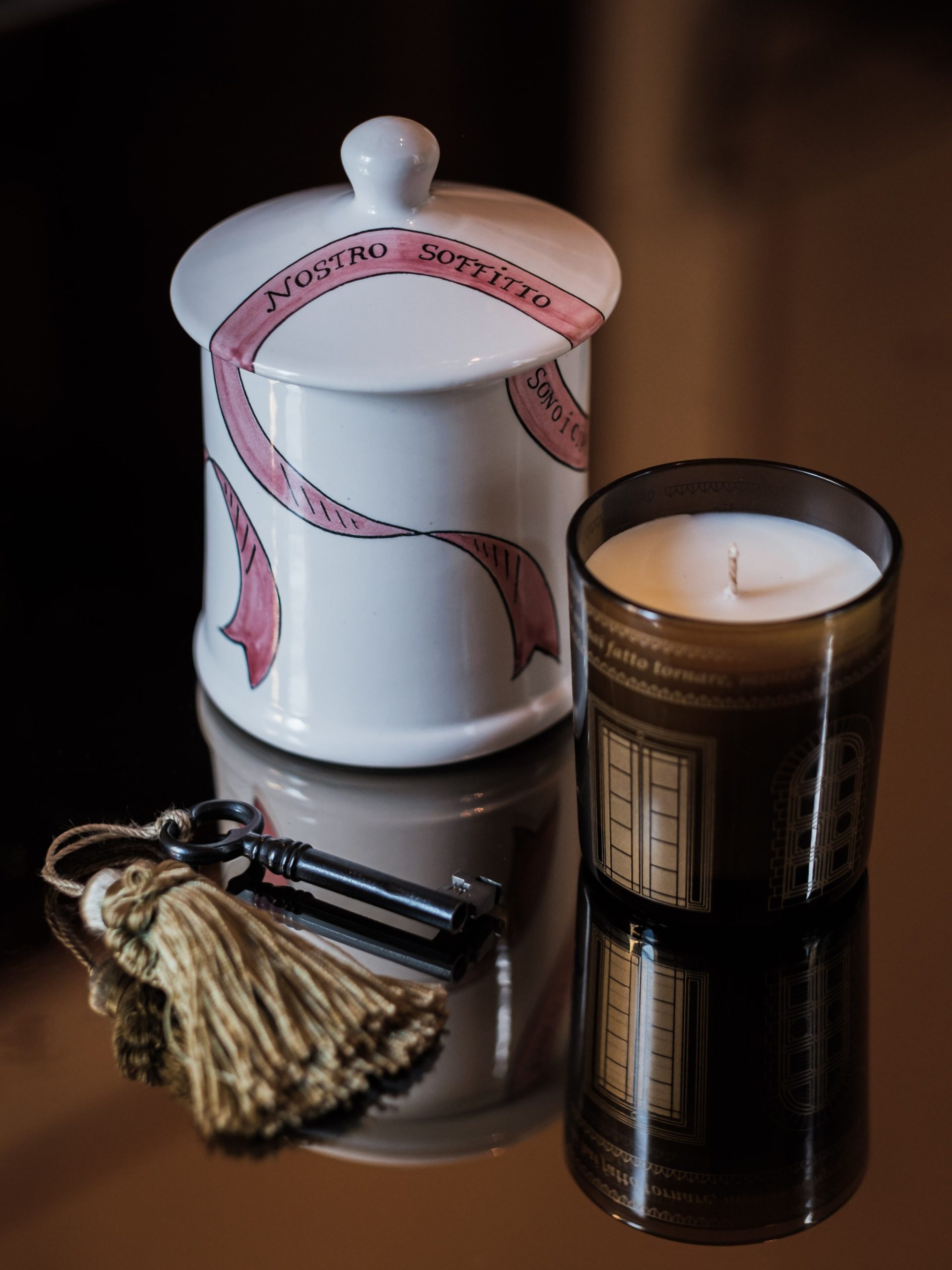
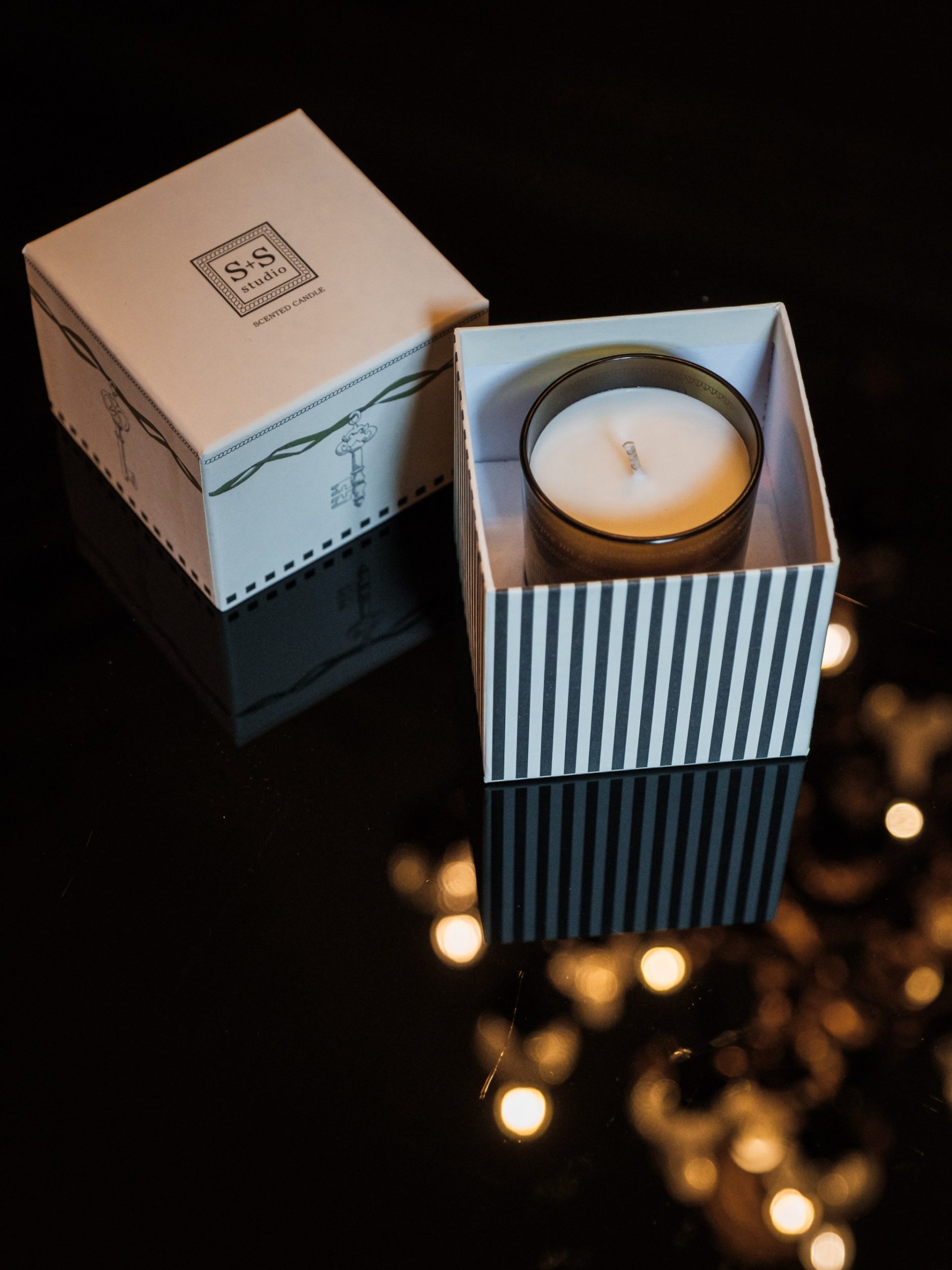
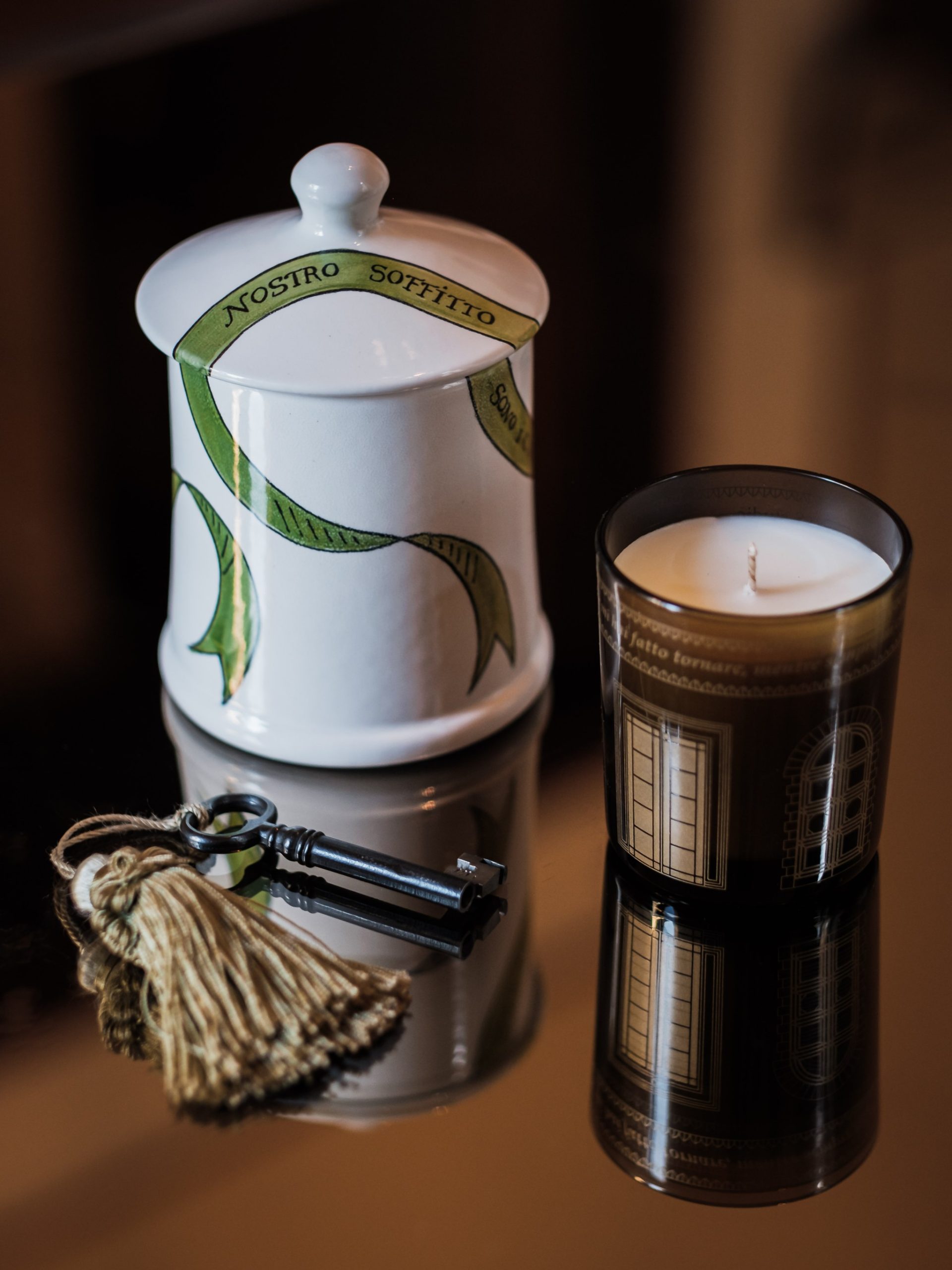
The natural evolution of the project led us to craft a candle that would hold this accord, bringing a light capable of accompanying the rooms of those dear to us. An object created to illuminate and shelter, in continuity with the original meaning of fire. It is a theme that resonates with us: evening light recalls the ancient hearts, when people gathered around that consoling warmth. To light it is simple act, an offering – a daily gesture that comforts and invites rest.
A flame that accompanies.
We imagine this candle carrying into homes a light that reflects our way of designing. If the flame invites reflection and the fire recalls distant times, it encourages concentration and draws a boundary between what lies beyond and what we feel is ours. As it burns, it transforms space: consuming air, shaping shadows, subtly altering volumes. It is already an architectural gesture, for designing means conversing with light and shade, with appearance and anticipation.
The doors that pass through us.
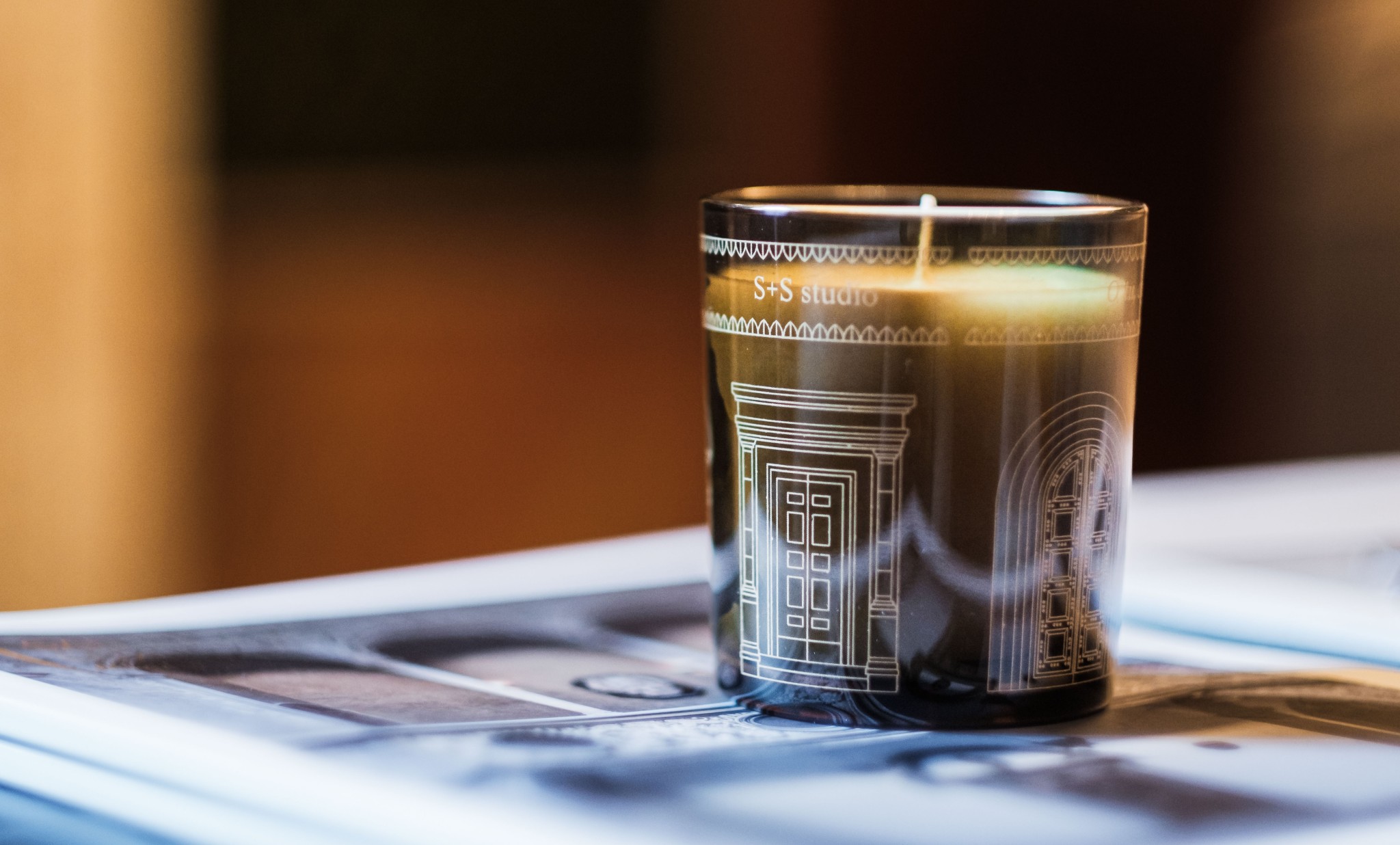
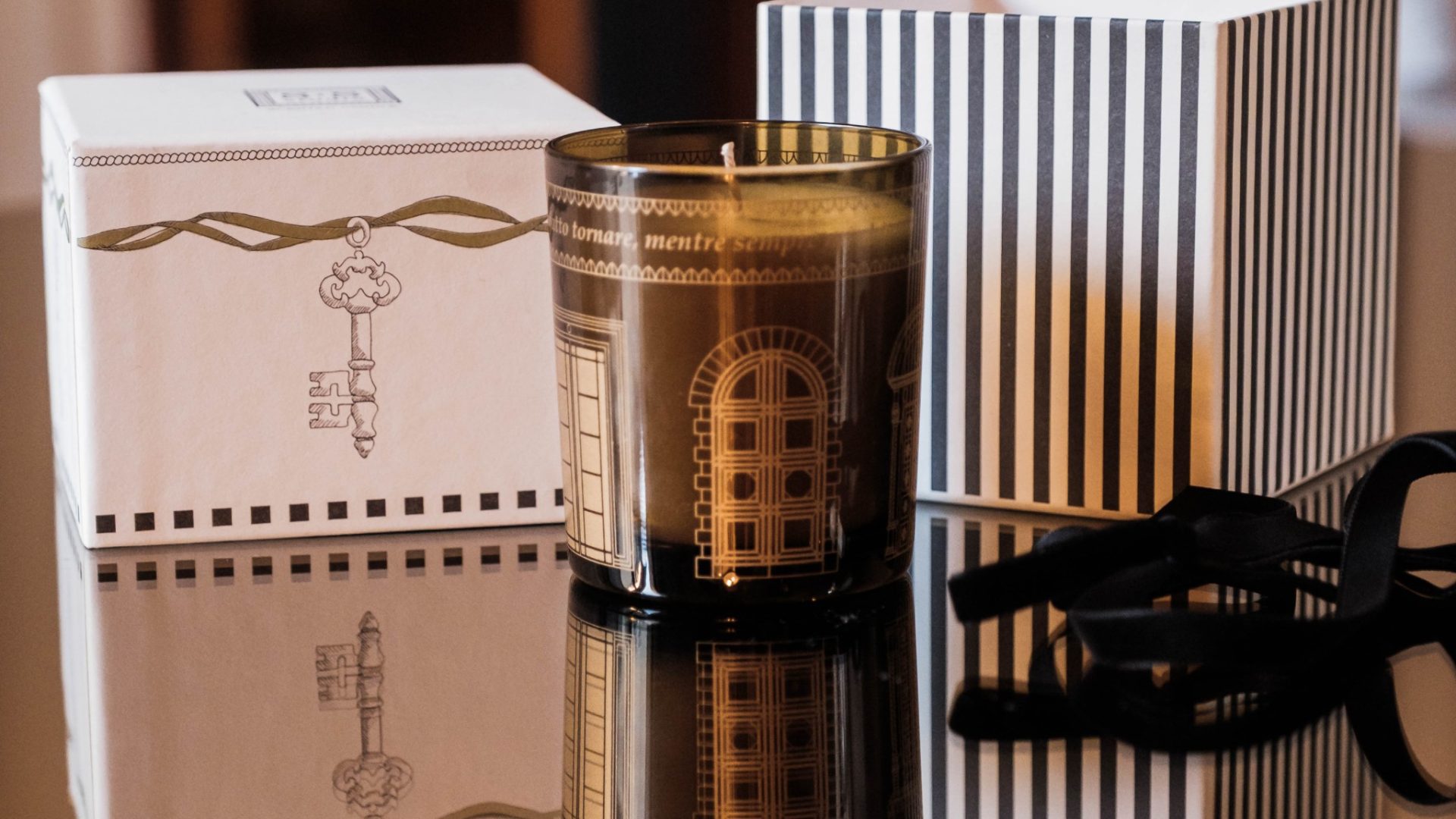
To tell its story, we gave it a form: five doors linked to our history and to the city, accompanied by small keays that suggests a perpetual passage. They evoke Palazzo Gondi, the Gates of Paradise, the Church of Santi Apostoli e Biagio in Piazza del Limbo, Palazzo Vecchio, and Palazzo Pitti: thresholds both real and symbolic of Florentine memory, to which we belong. Alongside them runs a frieze inspired by the motifs of Palazzo Gondi. Within its linear appears a figure reminiscent of light feathers, a detail also found in work by Donatello in Santa Croce, now familiar to us. It is the mark of historic craftmanship and Florentine architecture, rendered more essential yet deeply rooted in tradition.
Always returning.
We chose to inscribe an epigram that feels close to us: “O you who have made me return while always calling me”, a free rendering of a fragment attributed to Sappho. It is an invocation to the inner home, to our city, to the spaces we strive to build each day. A brief phrase, yet one capable of opening a world – like the flame of a candle that continues to illuminate in silence.