A creative journey born from the dialogue between designers and client.
Villa Accursio, a 19th-century building with a Renaissance-inspired character, stands within a large estate in the rolling hills of Impruneta, near Florence, adjacent to the birthplace house of Francesco Accursio, the jurist who lived here with his family in the 12th century. This older core, once belonging to the Accursio family, is currently undergoing a restoration and renovation project with the aim of enhancing and preserving all that remains of the ancient medieval dwelling.
Here, the project comes into contact with the deepest layer of the building, bringing back to light courtyards and cross vaults that had been sealed over time, restoring continuity to a structure that had remained suspended for centuries. The main villa thus establishes a direct relationship with this older presence, creating both a physical and symbolic connection between different eras.
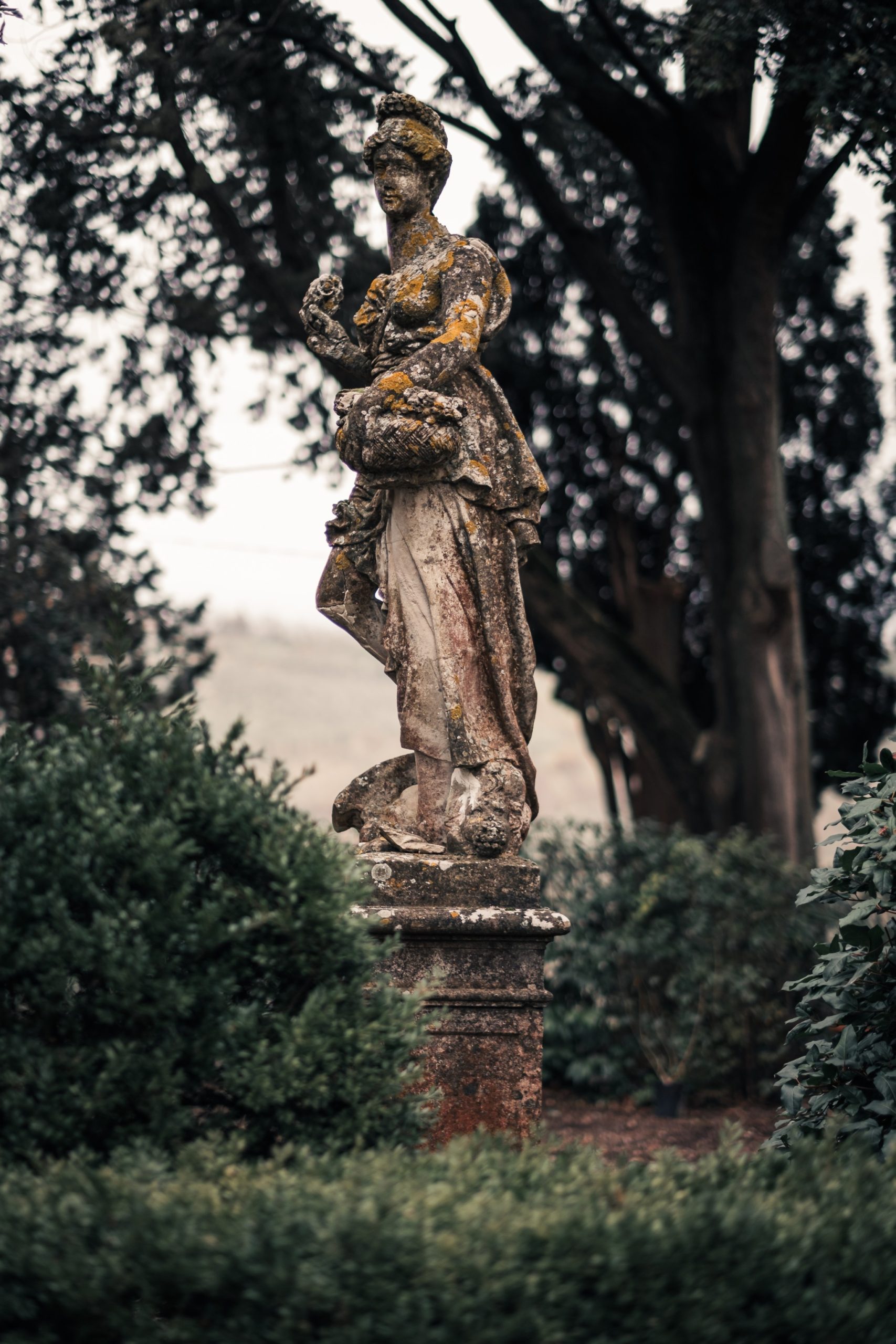
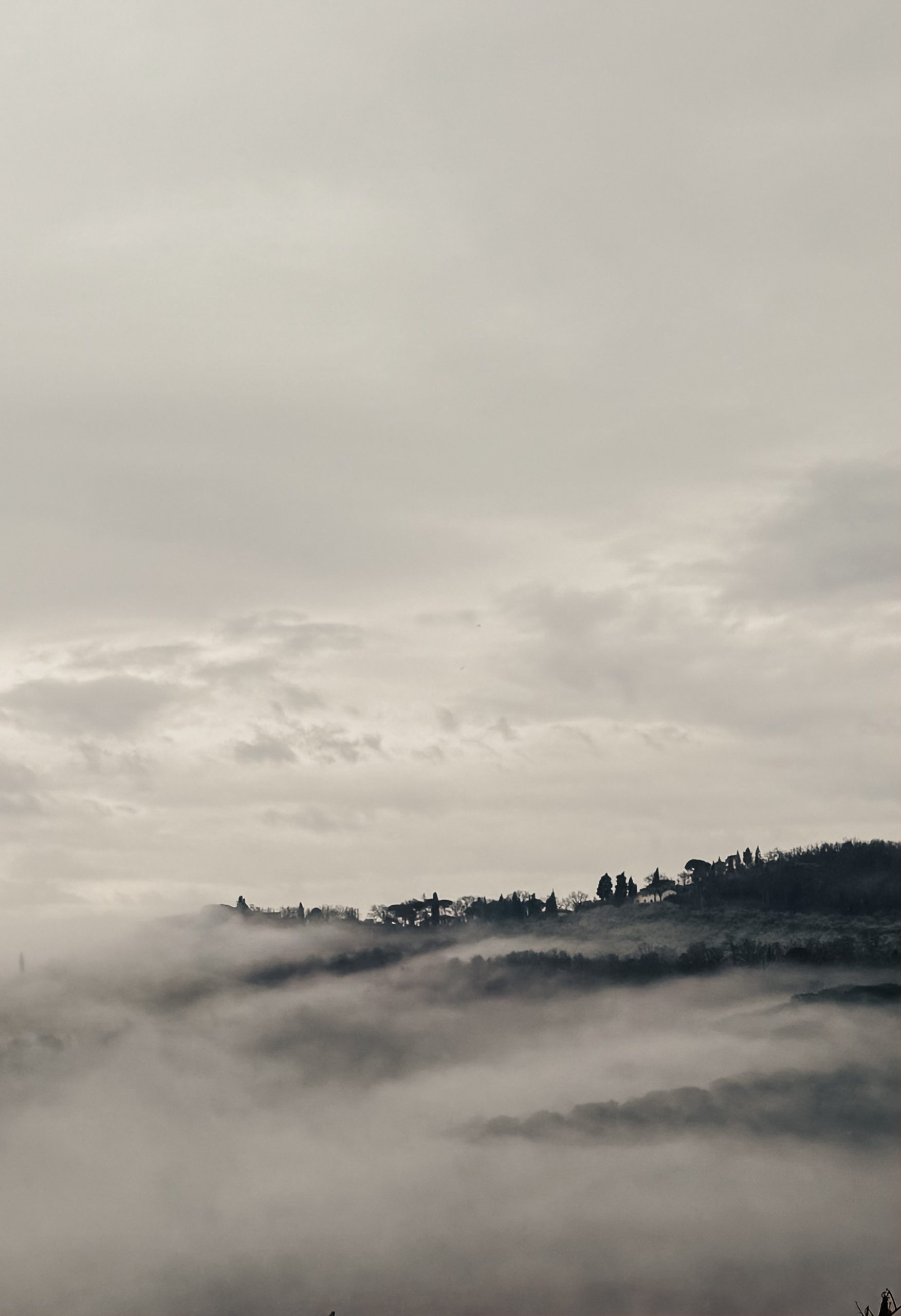
At the heart and driving force of the entire project is a cosmopolitan family who, after living for many years in diverse international contexts, chose to re-establish a connection with the places of their own history. A family capable of bringing into this home an energy made of color and relationships: this transition is reflected in a thoughtful way of living, where distant experiences find a new place within a stable environment.
At the time of purchase, the interiors were marked by a neo-Gothic setting, with armors, shields, and heraldic references foreign to the identity of the new family. Their removal also allowed clarity and coherence to be restored to the building, revealing the quality of its proportions and the logic of its spaces.
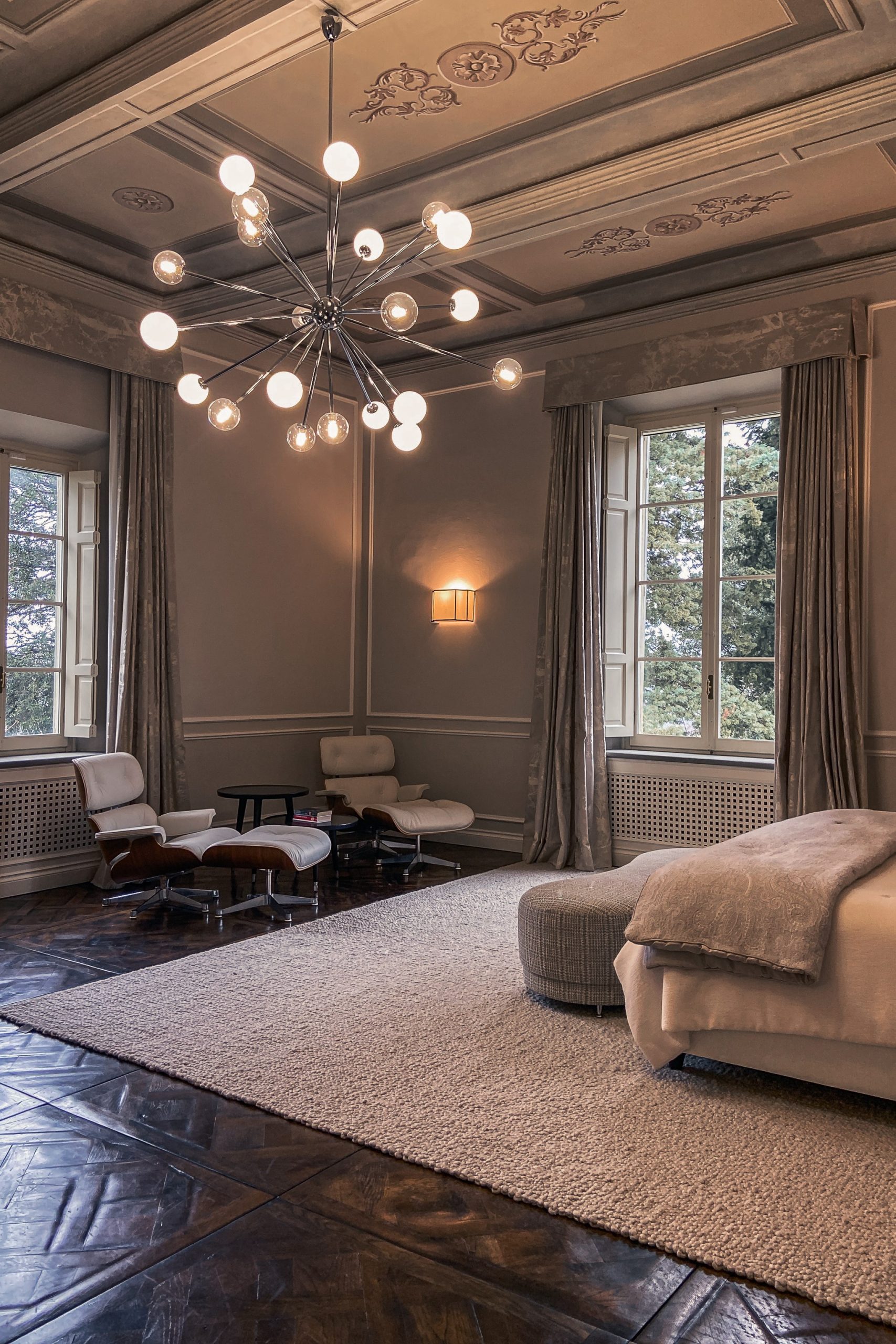
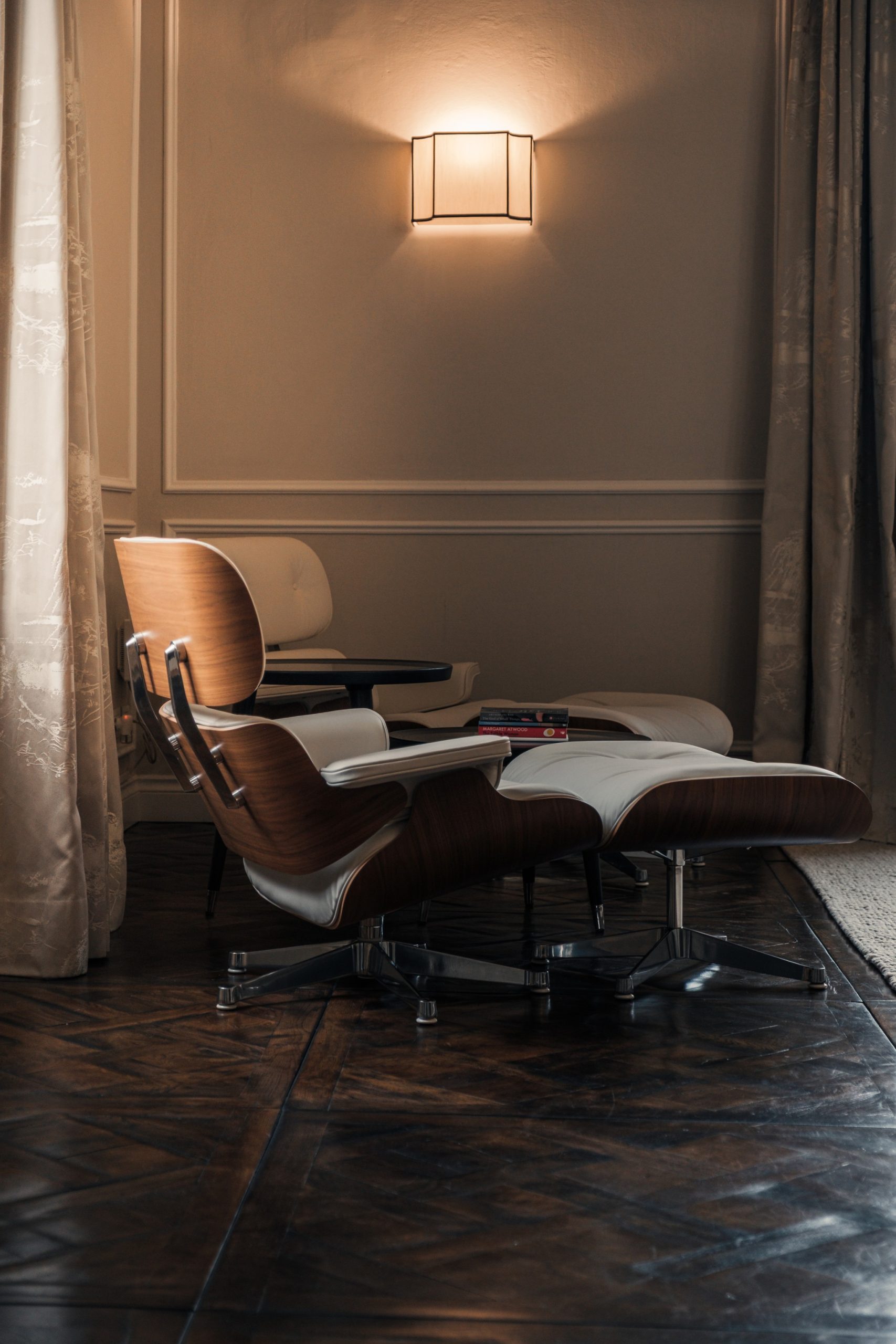
Within this context, architecture assumes a balanced role, accompanying everyday life through targeted interventions that integrate naturally into the existing structure. The rooms retain their stability while welcoming contemporary elements as coherent presences, capable of establishing a natural dialogue with their surroundings.
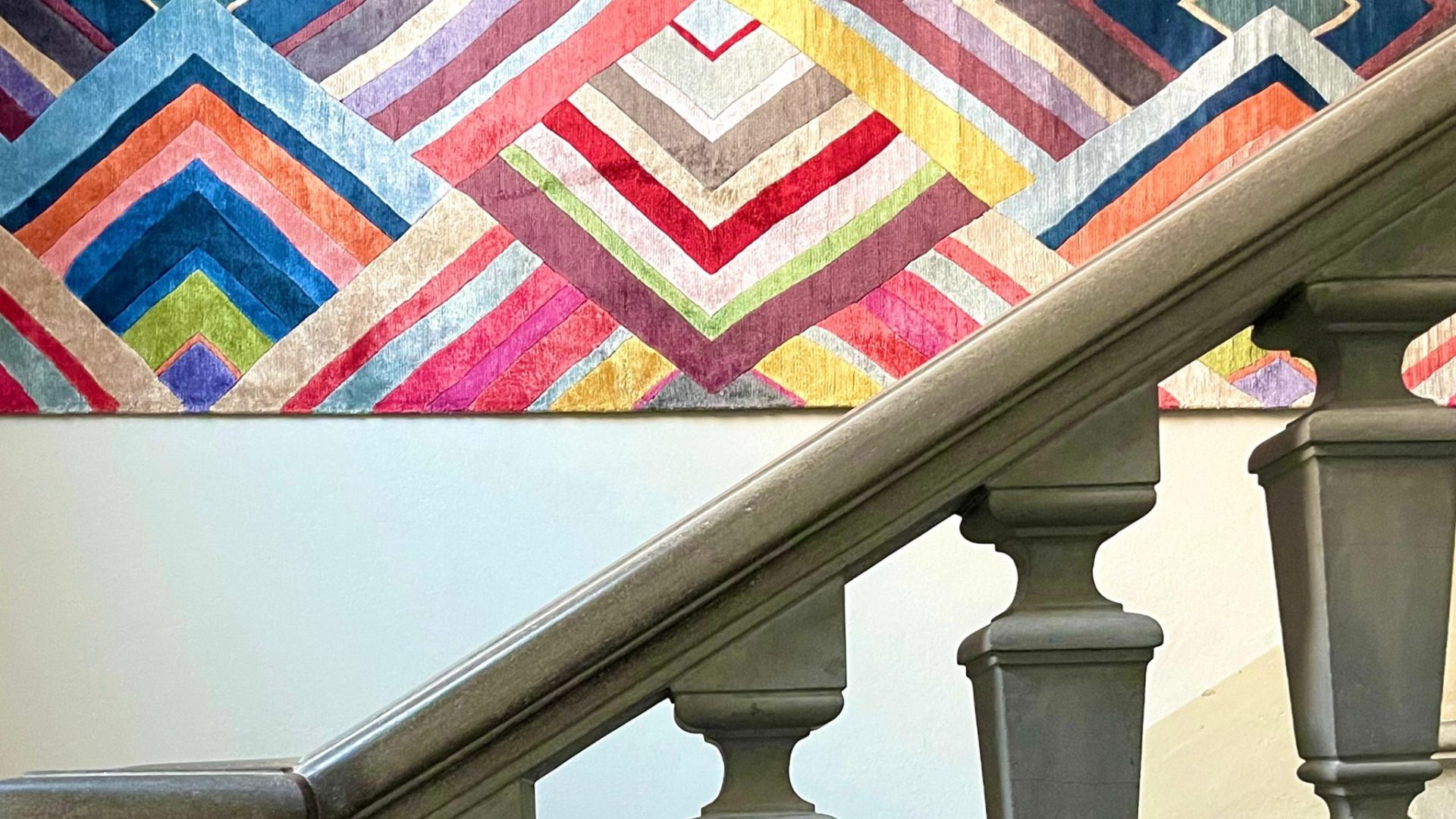
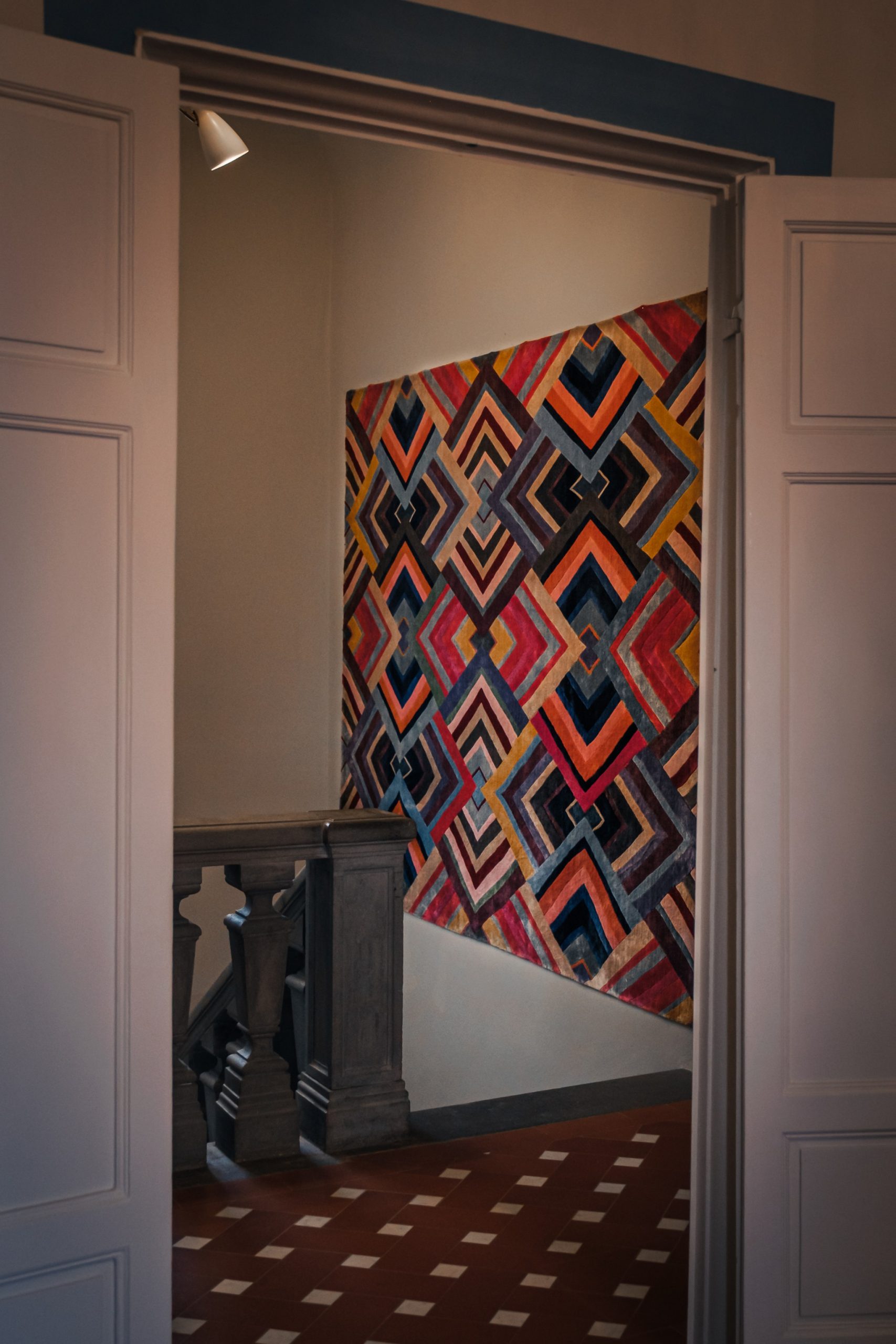
Color and material become instruments of connection, making a harmony built over time perceptible. A silk carpet, used as a tapestry, occupies one of the main walls and evokes memories of African textiles preserved by the family.
Produced by Illulian, a Milan-based company that manufactures its pieces in Nepal, this new element, set within the austerity of the pietra serena staircase, leads into the private bedroom area, offering a sense of softness and warmth to those ascending the stairs.
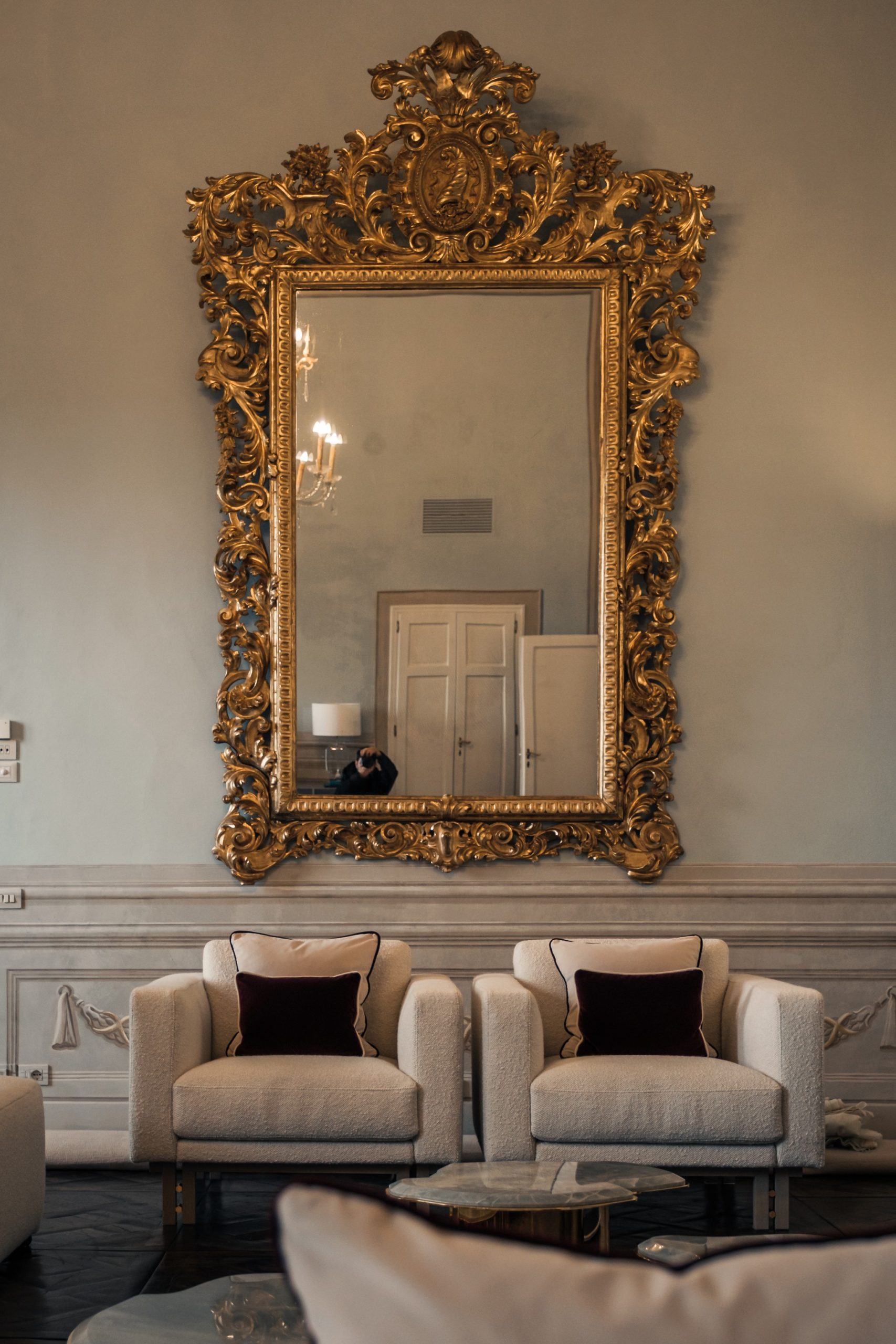
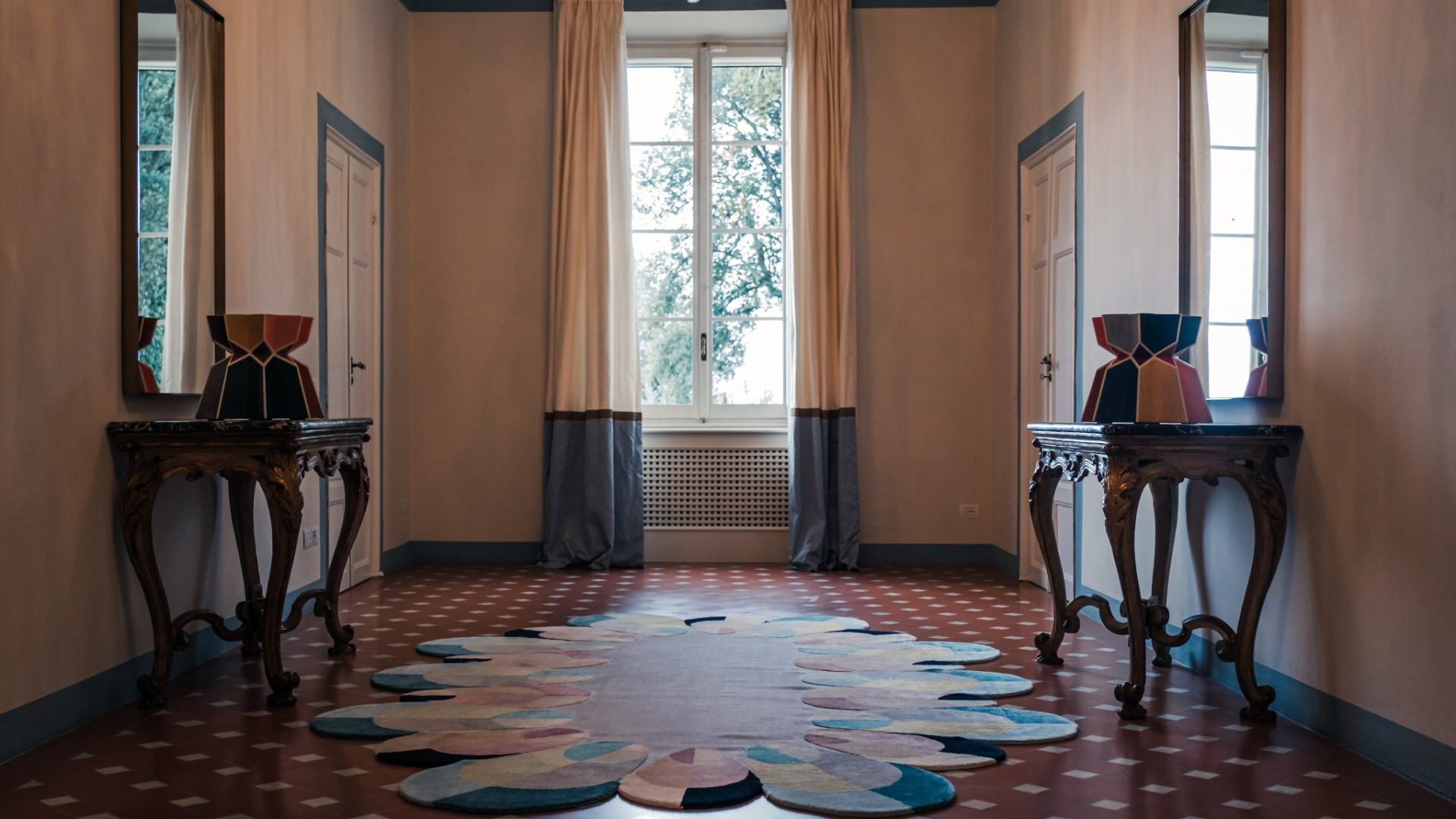
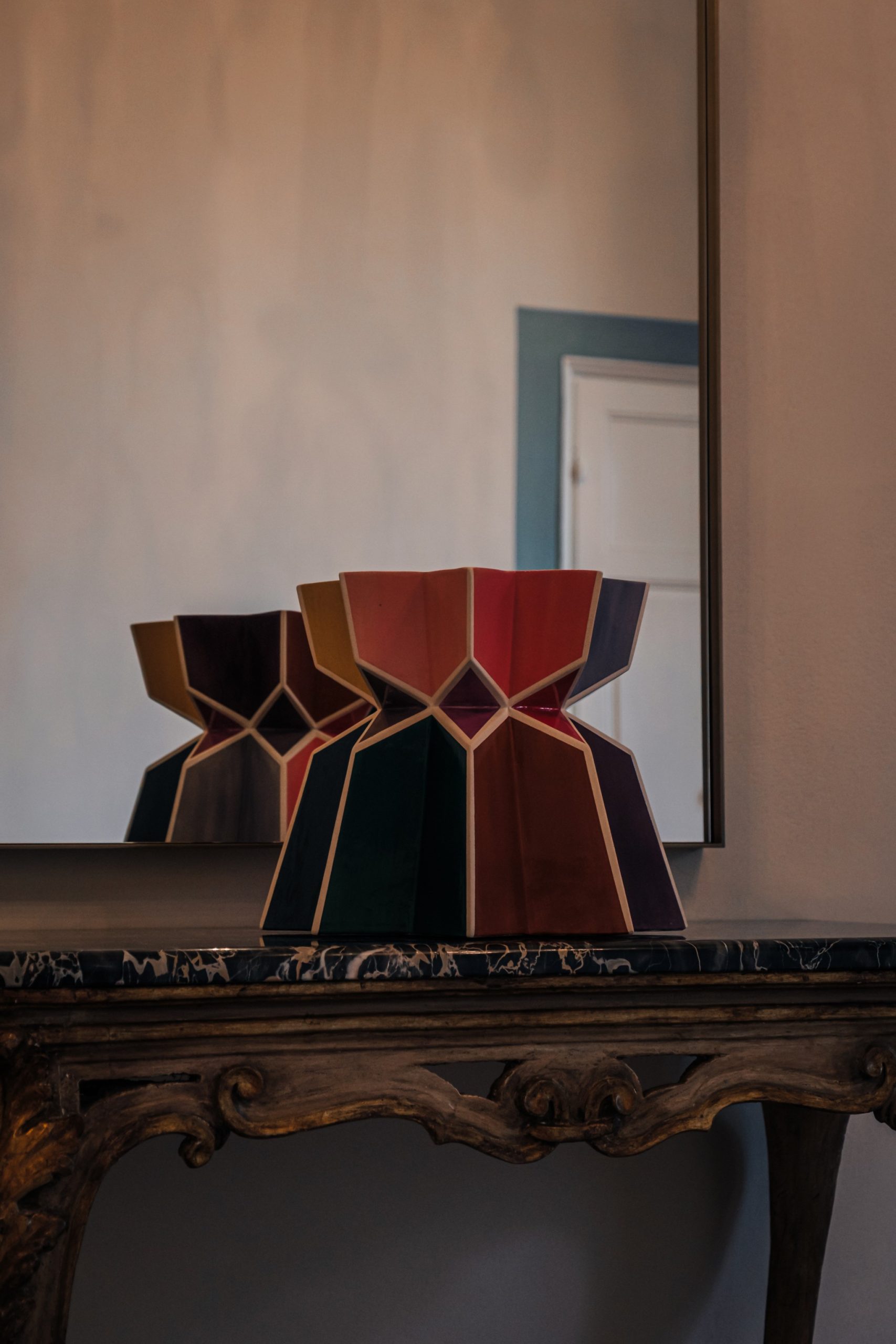
The geometry of the tapestry, which seems to vibrate with the gentle passage of light, inspired the addition of two ceramic vases by Spanish artist Nuria Mora, placed on two 19th-century consoles in gilded wood and marble. Mora’s work integrates with quietly disruptive grace into the architectural context and reflects her long-standing exploration of historical stratifications. For Nuria, sculptural objects are an interpretation of classical architectural orders, which themselves become living presences.
“Chromatic space feeds on an emphasis bordering on the spiritual through the treatment of matter, which is manipulated, transformed, ‘fired,’ and brought to life by the forms composed by the artist.”
Moving Away from the Yellow Line, Spazio C21, Reggio Emilia, 2024
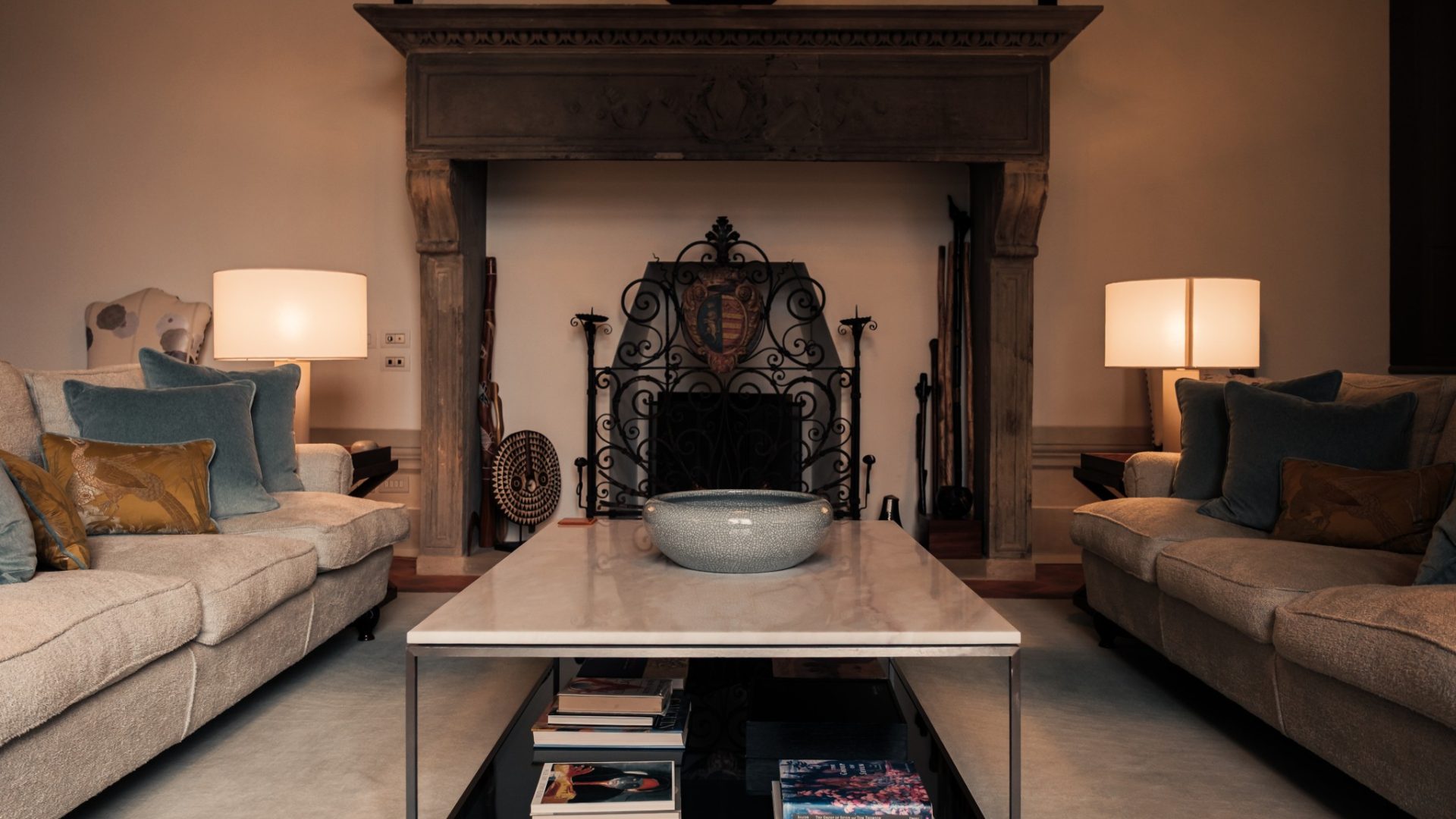
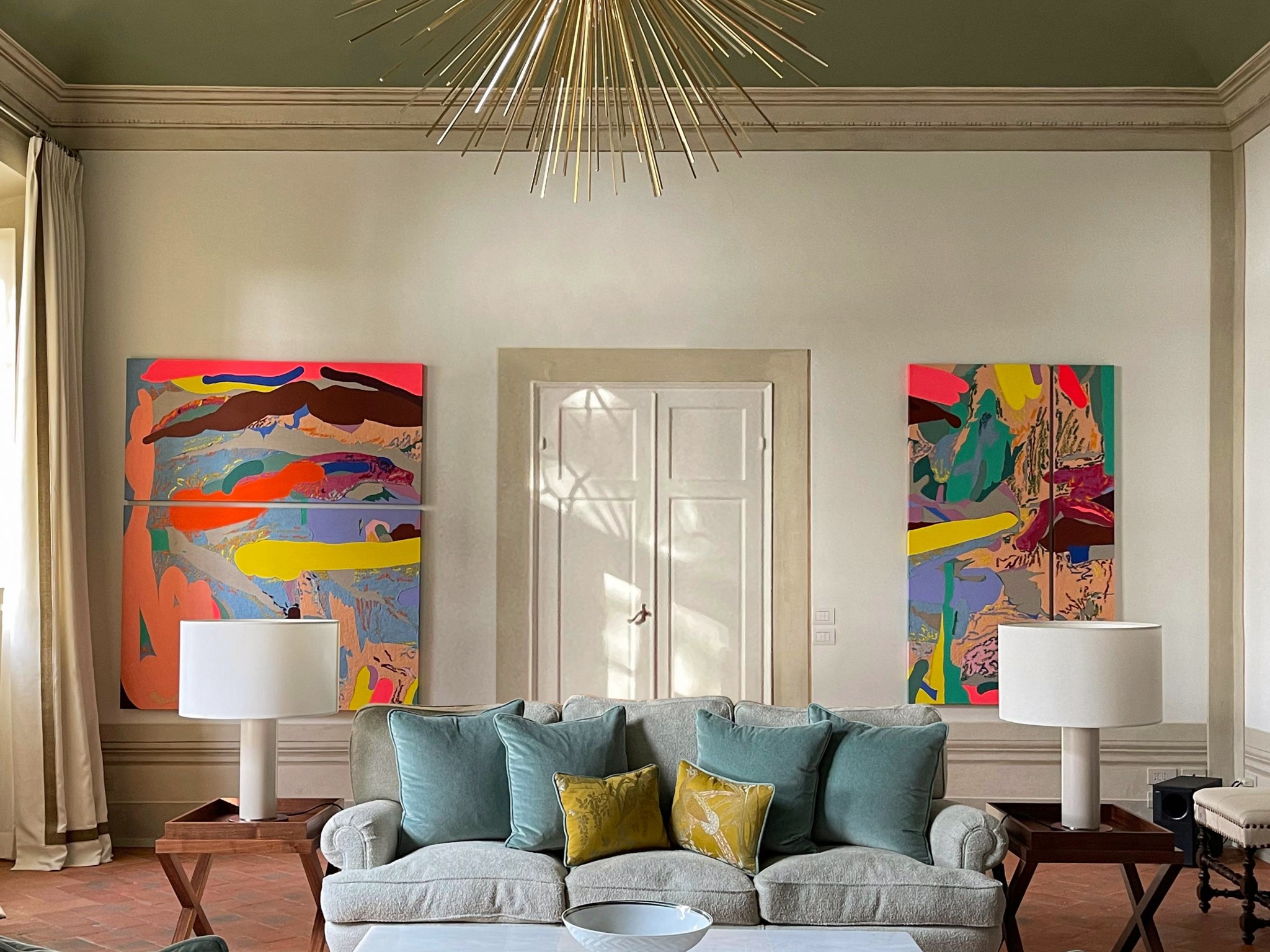
Nuria Mora’s work is also present on the ground floor, where two stunning canvases in acrylic and sand are displayed in the formal living room with its large stone fireplace. Like two pillars of matter and color, the artworks are positioned on either side of the room’s entrance, serving as a material backdrop to the perspective of the successive salons. The pieces introduce a vibrant substance, capable of absorbing and reflecting light, helping to create a visual dialogue between surfaces and defining the character of the spaces.
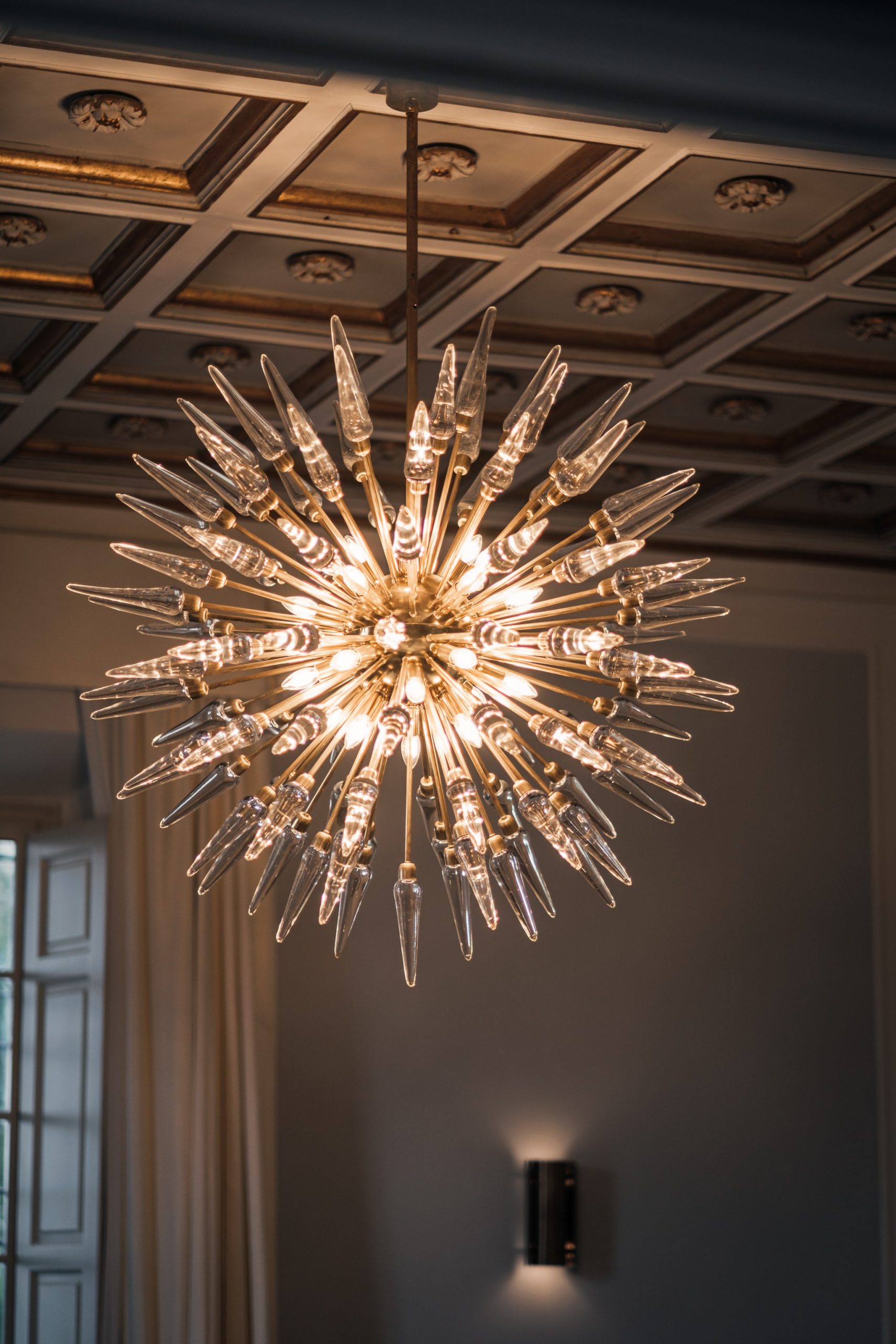
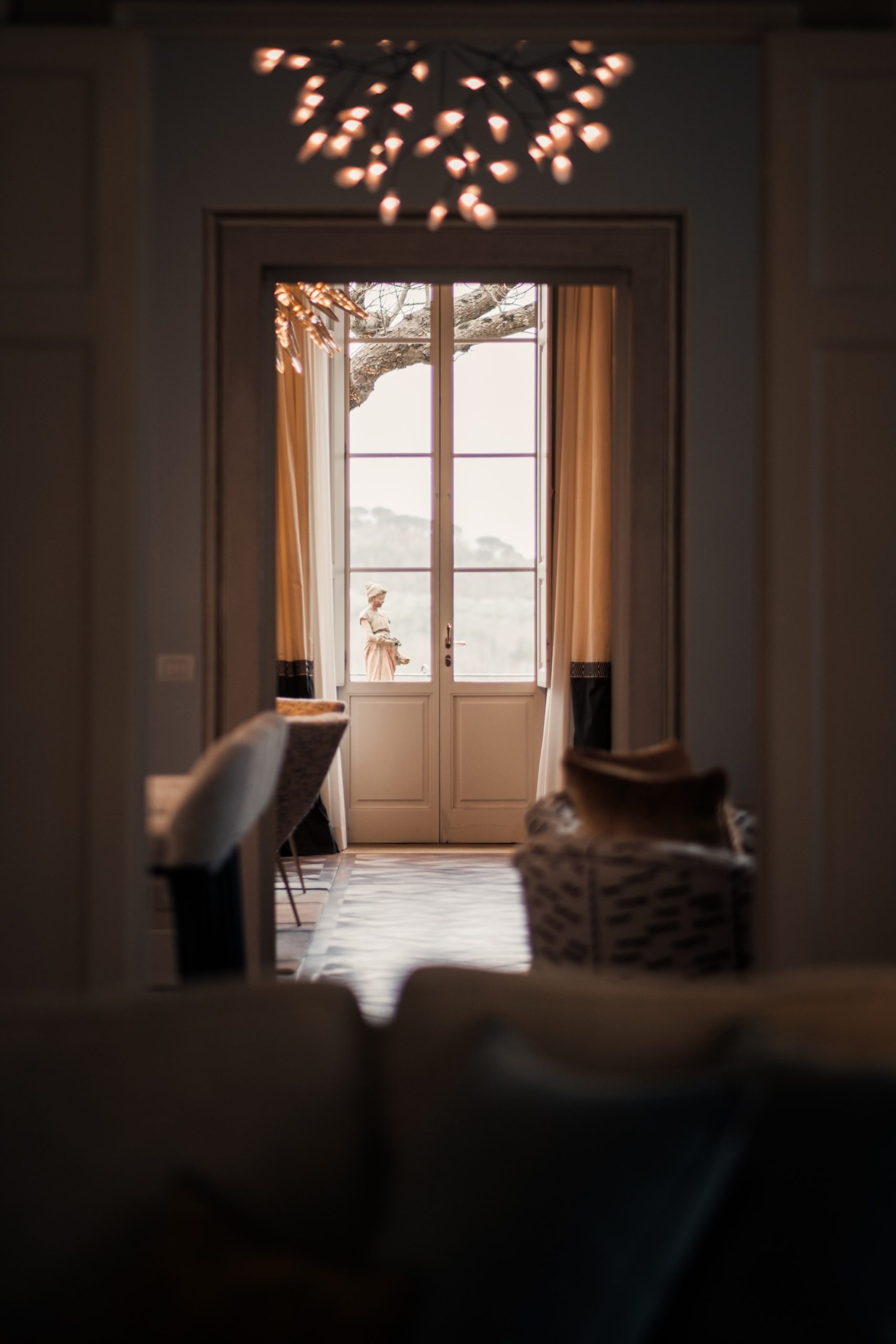
Also on the ground floor, large chandeliers from Murano flow naturally through the rooms, carrying with them the continuity of a deeply rooted artisanal tradition and establishing a direct connection between historical and contemporary dimensions.
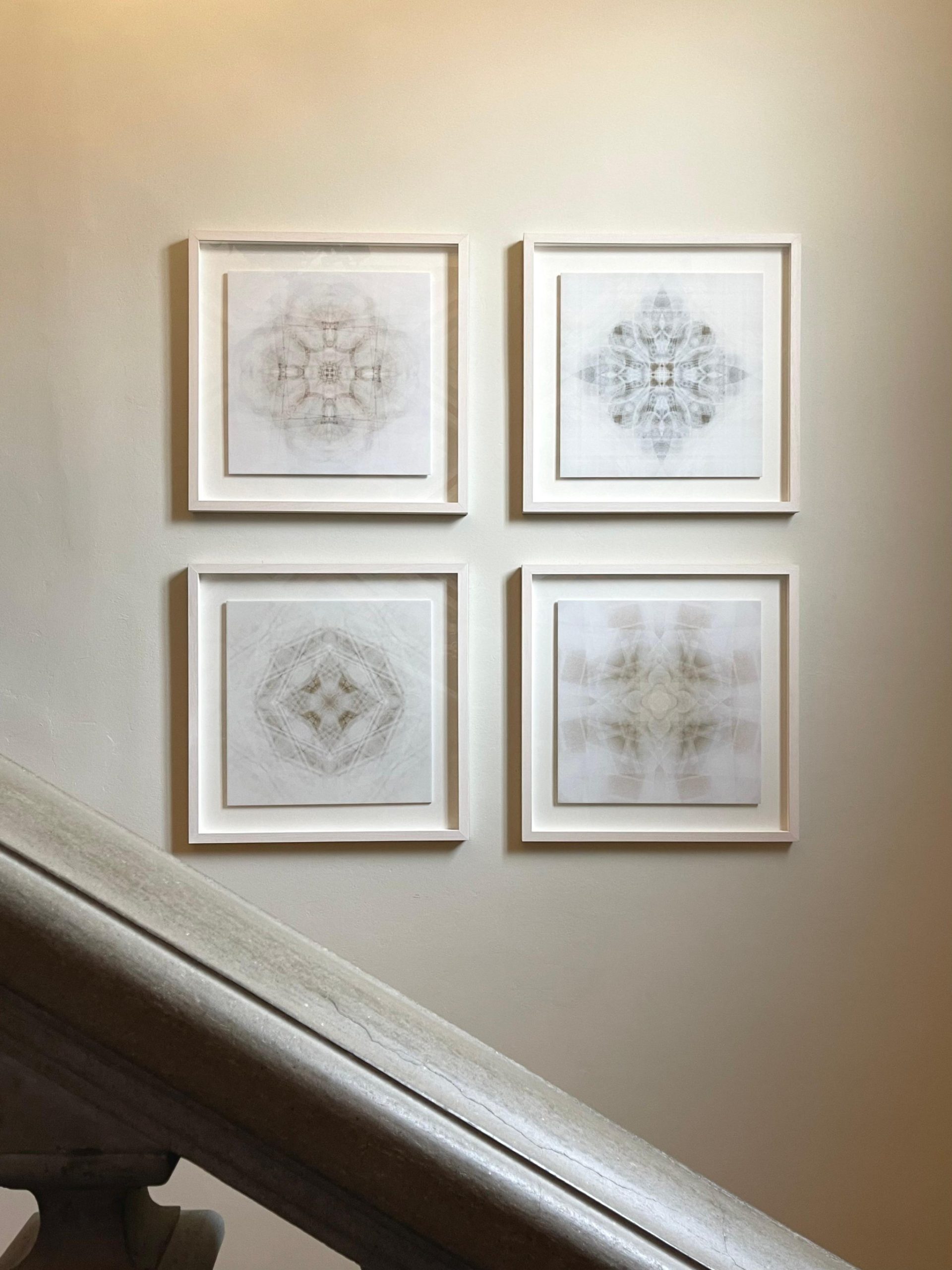
Florentine artist Guido Cozzi was commissioned a site-specific photographic work, developed from a direct observation of the architecture. The photographer spent a day in the villa capturing details—the staircase, a stained-glass window, the garden—and then multiplied and transformed them into compositions he calls “kaleidoscopes.” These images return to the space as new presences, accompanying the vertical circulation and offering a deeper interpretation of inhabitation.
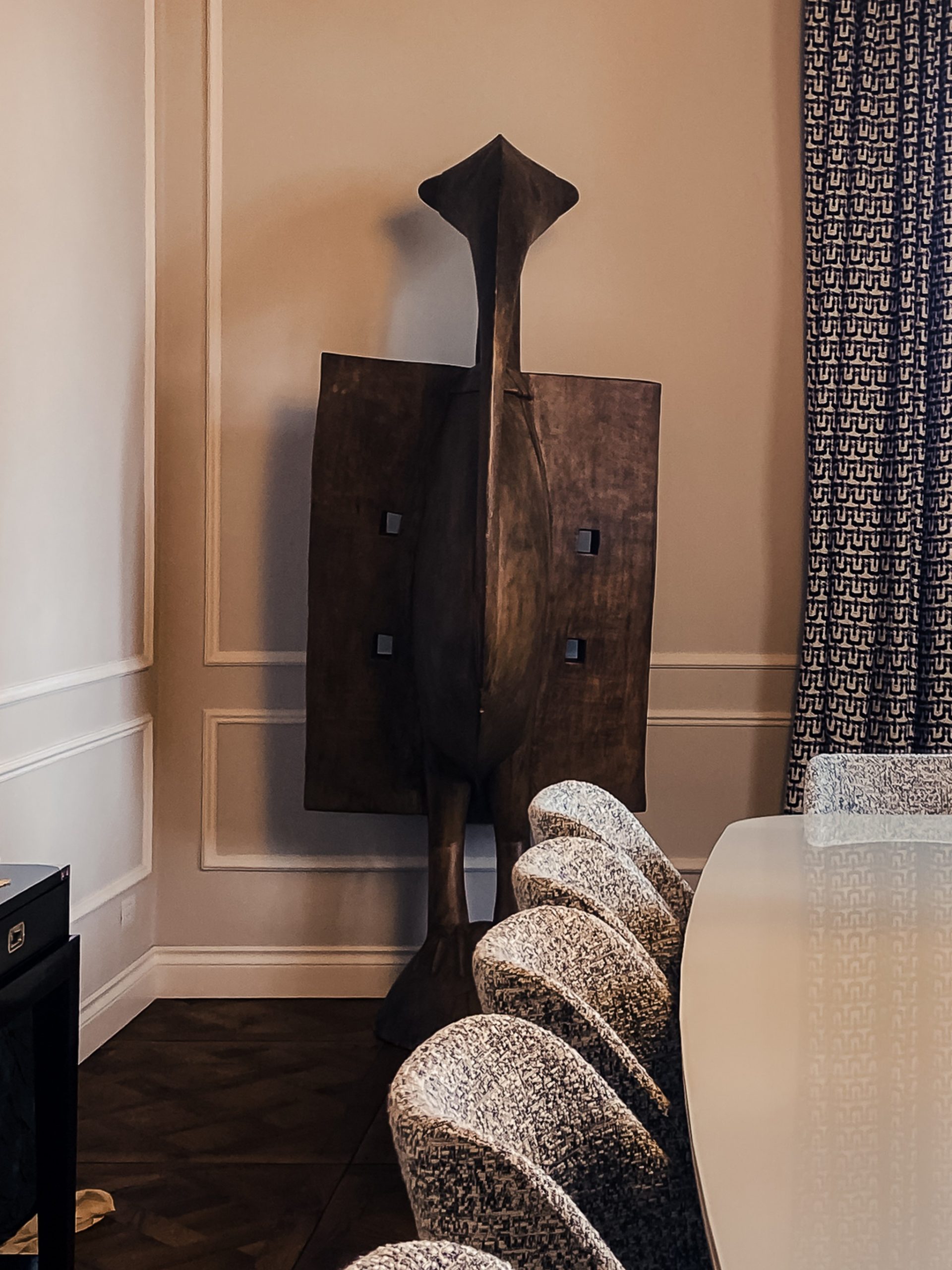
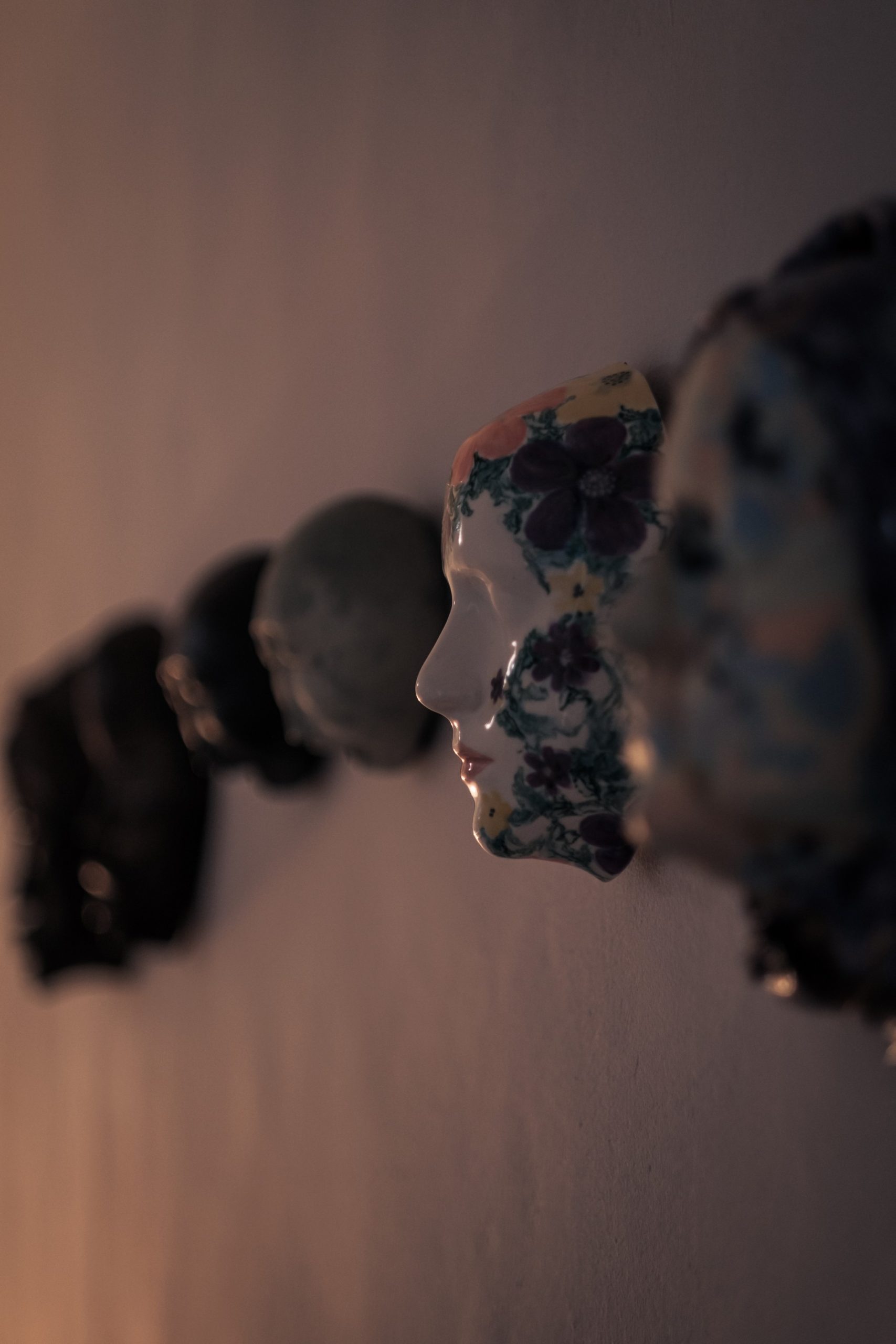
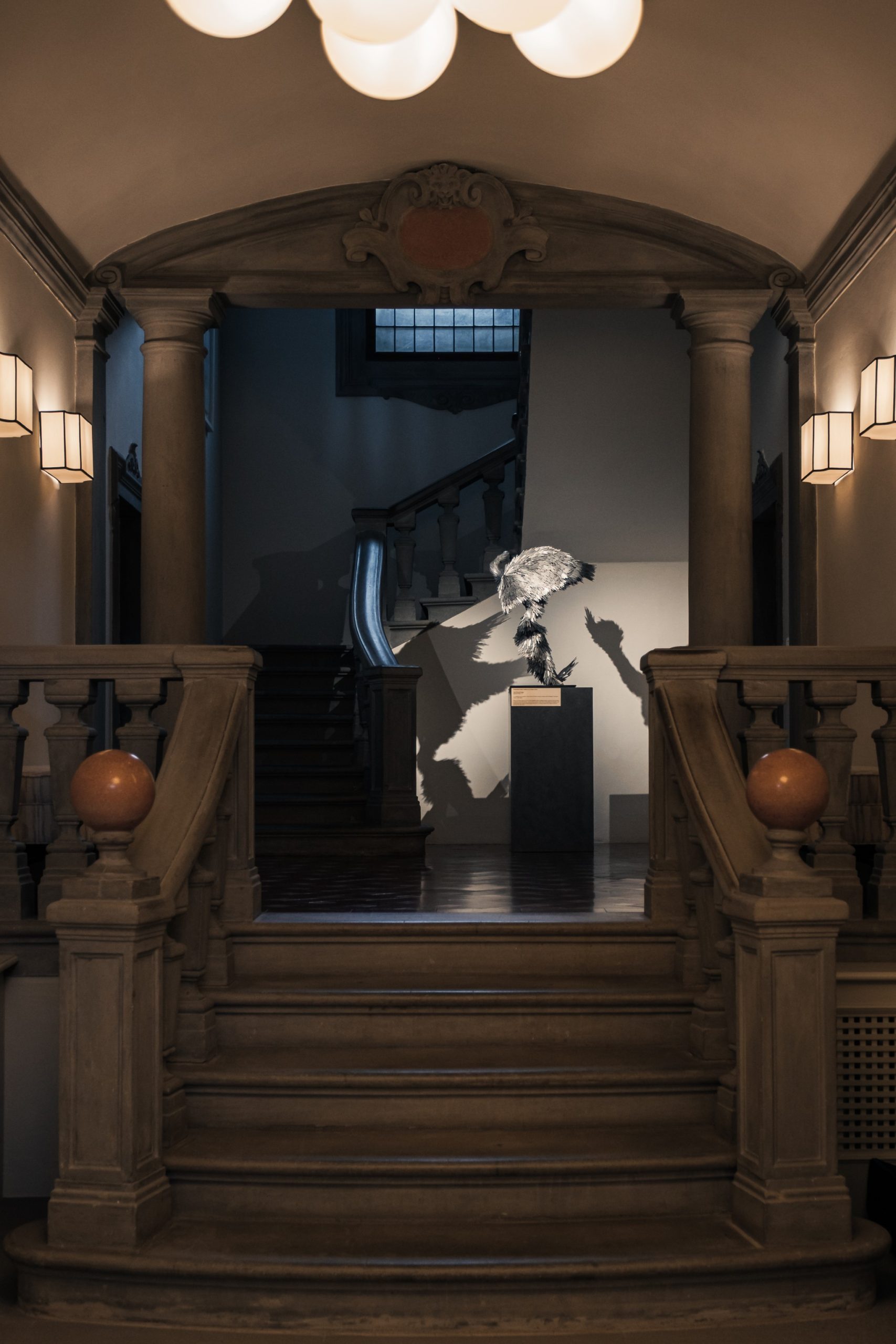
Alongside the contemporary works are antique African objects and various family artifacts, including a large wooden votive sculpture in the shape of a bird, over two meters tall. Its presence introduces a spatial and temporal gateway into the family’s memory within a domestic setting, helping to connect personal experience with the architectural dimension.
The story of the house aligns with that of its inhabitants; experiences gained in international contexts have shaped a perspective attentive to the value of materials, craftsmanship, and the relationship between objects and architecture. This approach translates into precise choices, where each element finds its place within a coherent whole. The intervention unfolds as a sequence of deliberate actions and a continuous relationship between architecture, artworks, and daily life, shaping a composition in which past and present continue to coexist in balance.